
- Your cart is empty
- Continue Shopping


Is It Just a Cold or Bronchitis? How to Spot the Signs and Protect Your Health
- Blog
- Posted on
-
by Muneeb Rehman
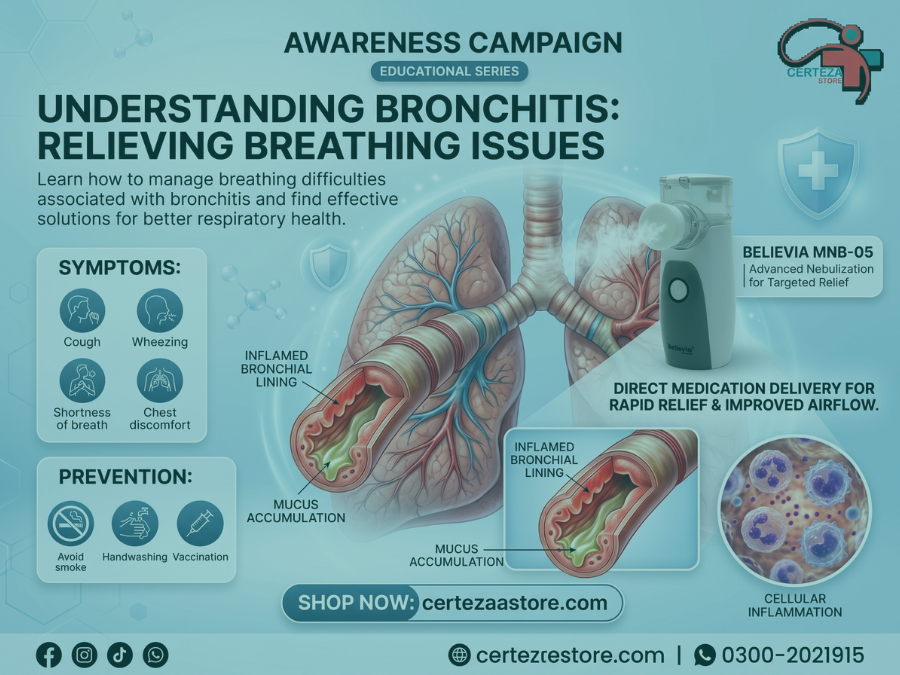
Many people in Pakistan wake up with a cough and wonder if it is just a cold or something more serious like bronchitis. Both conditions share some signs but they need different care. This guide will help you understand the difference and know when to seek help. We will also talk about safe ways to manage symptoms at home.
What Is Bronchitis
Bronchitis is a condition where the bronchial tubes get inflamed. These tubes carry air to your lungs. When they swell, they make mucus and cause a cough. Bronchitis can be acute or chronic. Acute bronchitis often follows a cold or flu. Chronic bronchitis is a long term condition that needs ongoing medical care. Bronchitis affects many people in Pakistan every year. The air quality in cities like Lahore and Karachi can make bronchitis worse. Dust, smoke, and pollution irritate the airways. Understanding bronchitis helps you take better care of your lungs.
Common Bronchitis Symptoms
Bronchitis symptoms often start like a cold but they last longer and feel deeper. Here are the main bronchitis symptoms to watch for:
- A cough that brings up thick mucus
- Mucus that may be clear, white, yellow, or green
- Chest discomfort or tightness
- Shortness of breath
- Wheezing when you breathe
- Low grade fever
- Fatigue and body aches
Bronchitis symptoms can last for several weeks. The cough from bronchitis often stays even after other signs go away. If bronchitis symptoms last more than three weeks, you should see a doctor.
Cold vs Bronchitis Key Differences
A cold and bronchitis share some signs but they are not the same. Here is a quick comparison:
| Cold Signs | Bronchitis Signs |
| Runny or stuffy nose | Deep cough with mucus |
| Sneezing | Chest tightness |
| Sore throat | Wheezing |
| Mild cough | Shortness of breath |
| Lasts 7 to 10 days | Cough lasts 2 to 3 weeks or more |
The main difference is where the problem sits. A cold stays in the nose and throat. Bronchitis goes deeper into the bronchial tubes. This is why bronchitis symptoms feel more serious.
When to See a Doctor
You should consult a qualified doctor if you notice any of these warning signs:
- High fever above 100.4 Fahrenheit (38 Celsius)
- Cough that lasts more than three weeks
- Coughing up blood
- Trouble breathing or shortness of breath
- Chest pain
- Unexplained weight loss
- You have a heart or lung condition already
A doctor can listen to your lungs and may order a chest X-ray. They can tell if it is bronchitis or something else like pneumonia. Do not delay seeing a doctor if you feel very unwell.
Home Remedies for Chest Congestion
Many people look for home remedies for chest congestion to feel better. Home remedies for chest congestion can help ease discomfort while your body heals. Here are some safe home remedies for chest congestion:
- Drink warm fluids like herbal tea or warm water with honey
- Use a humidifier or steam inhalation
- Keep your head elevated while sleeping
- Gargle with warm salt water
- Rest and avoid heavy activity
- Stay hydrated with water and clear soups
Home remedies for chest congestion work best when started early. They do not cure bronchitis but they can make you more comfortable. Always check with a doctor before trying new remedies, especially for children or elderly people.
Using Nebulizer for Cough
Using nebulizer for cough is a common way to deliver medicine directly to the lungs. Using nebulizer for cough can help open airways and loosen mucus. A doctor may prescribe medicine for the nebulizer such as bronchodilators or steroids.
Using nebulizer for cough is helpful for both adults and children. It turns liquid medicine into a fine mist that you breathe in. This allows the medicine to reach deep into the bronchial tubes. Using nebulizer for cough should always be done under medical guidance.
Many families in Pakistan find using nebulizer for cough convenient for home care. It reduces trips to the hospital for breathing treatments. Make sure to clean the nebulizer parts after each use to prevent infection.
Best Respiratory Equipment for Home Use
Having the best respiratory equipment for home use gives you peace of mind. The best respiratory equipment for home use includes a reliable nebulizer, a pulse oximeter, and a digital thermometer. These tools help you monitor and manage respiratory issues at home.
The best respiratory equipment for home use should be easy to operate and maintain. Look for devices with good warranty and local service support. The best respiratory equipment for home use can make a big difference during seasonal illness peaks.
When choosing the best respiratory equipment for home use, consider the needs of your family. Households with children, elderly members, or people with asthma benefit most from having the best respiratory equipment for home use ready.
Believia MNB-05 Nebulizer for Home Care
The Believia MNB-05 nebulizer is a trusted device for home respiratory care. The Believia MNB-05 nebulizer is compact, quiet, and efficient. It delivers medication effectively for bronchitis, asthma, and other breathing conditions.
The Believia MNB-05 nebulizer uses compressor technology to create a fine mist. This ensures the medicine reaches deep into the lungs. The Believia MNB-05 nebulizer is suitable for both adults and children. It comes with adult and pediatric masks.
Many doctors in Pakistan recommend the Believia MNB-05 nebulizer for home use. It is easy to clean and maintain. The Believia MNB-05 nebulizer is a practical choice for families who need regular nebulizer treatments. Always use the Believia MNB-05 nebulizer with medicine prescribed by your doctor.
Tips to Prevent Bronchitis
Preventing bronchitis is better than treating it. Here are practical steps to lower your risk:
- Wash hands often with soap and water
- Avoid close contact with sick people
- Get your flu vaccine every year
- Do not smoke and avoid secondhand smoke
- Wear a mask in dusty or polluted areas
- Keep your home well ventilated
- Eat a balanced diet to support immunity
- Exercise regularly to keep lungs strong
These habits also protect you from colds and flu. Good hygiene and clean air are your best defense against bronchitis.
Final Thoughts and Getting Help
Knowing the difference between a cold and bronchitis helps you take the right action. Bronchitis symptoms need attention and sometimes medical treatment. Home remedies for chest congestion and using nebulizer for cough can provide relief. Having the best respiratory equipment for home use prepares you for respiratory seasons.
If you need guidance on respiratory care equipment, Certeza Store is here to help. We provide reliable devices like the Believia MNB-05 nebulizer for families across Pakistan. Call us at 0300-2021915 for assistance or product information. Your health matters to us.
